Best Wineries in Napa Valley to Visit
There are more than 500 wineries here and room for maybe three or four in a day. This is how to pick the right ones by town, style and how they taste.
Short answer
The best Napa wineries to visit depend on what you want: benchland Cabernet in Oakville and Rutherford, history at Robert Mondavi and the two 1976 Judgment of Paris estates, castle theater at Castello di Amorosa, and walk-in ease at Grgich Hills or Peju. Reservations are the norm and fees averaged about $79 in 2025, so book ahead or let a tour handle it.
Napa has more than 500 wineries and room in a single day for maybe three or four of them. That gap is the whole problem with picking where to taste. The valley floor runs only about 30 miles from the city of Napa up to Calistoga, yet it holds the arch at Robert Mondavi, the two estates that beat France in 1976, a Tuscan-style castle in the hills, and hundreds of family cellar doors most visitors never hear of. Choosing well matters more than choosing many.
Booking choice: Turn your estate shortlist into a custom private driving route, with appointments and tasting fees confirmed separately. Explore A Custom Winery Route
This is a shortlist built around how you actually taste: by town and sub-appellation, by the style in your glass, and by whether the door will seat a walk-in or wants a booking days ahead. The operators we work with make these calls every week, and the honest through-line is simple. Fewer, better-matched stops beat a checklist of famous names every time.
What are the best wineries in Napa Valley to visit?
The best Napa wineries to visit depend on your taste. For Cabernet, aim at the Oakville and Rutherford benchland. For history, Robert Mondavi and the two 1976 Judgment of Paris winners. For spectacle, Castello di Amorosa's hilltop castle. For an easy walk-in, downtown Napa tasting rooms plus estates like Grgich Hills and Peju. Match the winery to the day you want.
No single list is right for everyone, because Napa rewards a theme more than a ranking. A Cabernet pilgrimage looks nothing like a sparkling-and-lunch day, which looks nothing like a first-timer's greatest-hits loop. The shortlist below sorts the standout names by what they are actually good for, so you can pick a through-line and build the day around it rather than trying to see everything.
| Winery | Town / AVA | Best for | Tasting style |
|---|---|---|---|
| Robert Mondavi | Oakville | Valley history, the iconic arch, a fresh 2026 relaunch | Seated and tours, from about $60 |
| Stag's Leap Wine Cellars | Stags Leap District | The 1976 Cabernet that beat France | Seated estate tastings |
| Chateau Montelena | Calistoga | The 1976 Chardonnay winner, a stone chateau | Seated, reservation |
| Castello di Amorosa | North valley | A Tuscan-style hilltop castle, family appeal | Guided castle tours |
| Opus One | Oakville | Ultra-premium Cabernet blend | Reserve, appointment-only |
| Grgich Hills | Rutherford | Organic wines, walk-in friendly | Bar and seated |
| Sterling Vineyards | Calistoga | Hilltop views, an award-winning visit | Self-paced experience |
Two or three wineries clustered by town can fill a day. Shared tours follow the operator’s itinerary; a private route can be built around your requested estates, subject to their appointments.
How should you choose wineries by AVA and style?
Choose by sub-appellation, because place shapes the wine. Oakville and Rutherford grow Napa's most celebrated Cabernet on warm valley-floor benchland. Stags Leap District Cabernet is silkier. Los Carneros and cooler Oak Knoll lean to Chardonnay, Pinot Noir and sparkling. Mountain AVAs like Howell Mountain and Mount Veeder give darker, more structured reds. Pick a band and stay in it.
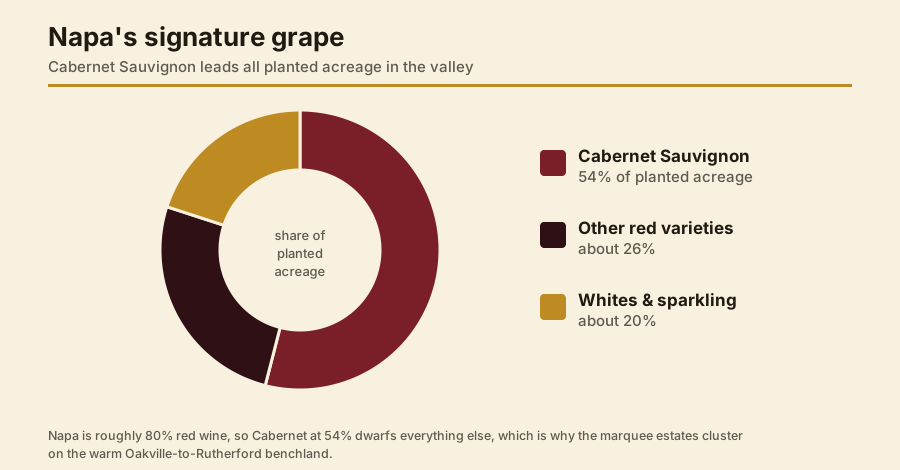
Cabernet Sauvignon is the valley's signature by a wide margin, at 54 percent of all planted acreage, which is why so many marquee names cluster on the Oakville-to-Rutherford stretch. But Napa is not one wine. The southern end near San Pablo Bay stays cool enough for crisp whites and sparkling, and the two mountain ranges on either side produce reds with more grip and tannin than the floor. Sorting by AVA keeps your palate from lurching between extremes and keeps drive times short.
| Sub-AVA | Signature style | A name to know |
|---|---|---|
| Oakville | Powerful, structured Cabernet | Robert Mondavi, Opus One |
| Rutherford | Cabernet with the famous "Rutherford dust" grip | Grgich Hills |
| Stags Leap District | Silky, perfumed Cabernet | Stag's Leap Wine Cellars, Lewis Cellars |
| Calistoga | Warm-climate reds, castle theater | Chateau Montelena, Castello di Amorosa |
| Los Carneros / Oak Knoll | Chardonnay, Pinot Noir, sparkling | Cooler south-valley estates |
| Howell Mountain / Mount Veeder | Dark, tannic mountain reds | Hillside producers |
If the sub-appellations themselves interest you, how Napa's sub-AVAs shape a wine's style explains the nested appellations, including the seventeenth, Crystal Springs. For choosing here, the table is enough: pick the row that matches the glass you want, and let the town cluster set your route.
Which Napa wineries are best for Cabernet Sauvignon?
For Cabernet, the heart of the valley is the Oakville and Rutherford benchland, where warm days, gravelly soils and cool nights build Napa's most collectible reds. Robert Mondavi and Opus One anchor Oakville. Grgich Hills and the Rutherford estates carry the "Rutherford dust" signature. Just south, Stags Leap District turns out a softer, more aromatic style of Cabernet.
This is the wine that put Napa on the map, so the Cabernet trail is where the big names concentrate. Robert Mondavi in Oakville reopened in April 2026 after a multi-year, multimillion-dollar renovation that added a hospitality wing and vineyard terraces while keeping the landmark arch and tower, with tastings from about $60. A few miles south on the Silverado Trail, Lewis Cellars opened a new Stags Leap District estate room in October 2025, with seated tastings running $80 to $150 and pairings from a Michelin-starred kitchen. Both are current, not folklore.
A Cabernet day rewards contrast more than volume. Pair one powerhouse Oakville estate with a silkier Stags Leap District room and you learn more about Napa Cabernet in two stops than a rushed four would teach you. A private day is the format that lets you draw exactly that line, because you can request your preferred estates and coordinate confirmed appointments with the driver.
The private SUV option accepts a customer itinerary and provides a dedicated driver for up to six passengers. Winery appointments and the booked service duration need confirmation; tasting fees, meals, gratuity and applicable surcharges are separate.
Which Napa wineries are best for sparkling and white wine?
For bubbles and whites, head south to the cooler end of the valley. Los Carneros and the Oak Knoll District, closest to the bay fog, grow the Chardonnay and Pinot Noir behind Napa's sparkling wine and its crisp whites. Yountville is home to a major sparkling house, CHANDON, which won the region's 2026 sustainability award. A cool-climate stop is the natural palate-cleanser between big Cabernets.
Napa is roughly 80 percent red, so its whites and sparkling wines are easy to overlook, yet they make one of the smartest stops on a full day. The southern appellations sit close enough to San Pablo Bay for morning fog to cool the vines, which preserves the acidity that Chardonnay and sparkling wine need to stay bright. A single cool-climate tasting slotted between two Cabernet estates resets your palate and shows a side of the valley most day-trippers skip entirely. It is also a gentler way to open a day, before the tannins arrive.
Which wineries are best for architecture, views and a bit of theater?
For spectacle, aim north. Castello di Amorosa is a Tuscan-style hilltop castle winery with drawbridge, courtyards and a working great hall, a hit with families and first-timers. Sterling Vineyards sits on its own hill in Calistoga and won the region's 2026 innovative-experience award. Cuvaison took the 2026 architecture prize, and Chateau Montelena pours in a century-old stone chateau.
Some Napa visits are about the wine, and some are about the setting, and the north end of the valley leans into the show. Castello di Amorosa is the clearest example, a from-scratch medieval castle that took decades to build, and it anchors one of the trolley tours precisely because it is as much sightseeing as tasting. The 2026 Great Wine Capitals awards recognized the design end of the valley too, with Cuvaison honored for its architecture and landscapes and The George for hospitality.
| Winery | What makes it a spectacle | Where |
|---|---|---|
| Castello di Amorosa | A working Tuscan-style castle, courtyards, family tours | North valley |
| Sterling Vineyards | Hilltop estate, 2026 innovative-experience winner | Calistoga |
| Cuvaison | 2026 architecture and landscapes award | Los Carneros |
| Chateau Montelena | Century-old stone chateau, lakeside grounds | Calistoga |
| Boisset Collection | 2026 art and culture recognition | Multiple rooms |
If a castle is on the list, the trolley itinerary that includes Castello di Amorosa offers transport from Yountville without driving yourself.
The Castle trolley departs from Yountville and lists Castello di Amorosa plus two other winery stops. Lunch is included; winery and tasting fees are extra. Guests must be 21 or older, and the specific castle experience should be confirmed.
Which historic wineries put Napa on the world map?
Three names carry the origin story. At the 1976 Judgment of Paris, a blind tasting where Napa beat France, a Stag's Leap Wine Cellars Cabernet topped the reds and a Chateau Montelena Chardonnay topped the whites. Robert Mondavi, who opened his Oakville winery in 1966, is widely credited with driving the modern quality era. All three still welcome visitors today.
The 1976 result is the single most repeated fact in Napa, and for good reason: it is the moment the valley stopped being a curiosity and started being a rival to Bordeaux and Burgundy. On May 24, 1976, French judges rated California wines above famous French bottles in a blind lineup, and the two winning Napa wines are now held by the Smithsonian. Tasting at either estate is as close as wine travel gets to standing where the story turned.
Robert Mondavi belongs in the same sentence for a different reason. The Oakville estate has been a teaching ground for Napa winemaking since 1966, and its 2026 relaunch, timed to the winery's 60th anniversary, keeps it firmly on the visitor map. For the full backstory of why 1976 mattered so much, how the Judgment of Paris shaped Napa's appellations sets it in the context of the region's wine law.
Do you need reservations, and what do tastings cost?
Book ahead to be safe. Reservations are the norm in Napa now, and tasting fees averaged about $79 in 2025. Expect roughly $20 to $50 for entry flights, $50 to $90 for standard seated tastings, and $100 to $200 or more for reserve, library or food-paired experiences. Fees are commonly waived or credited toward a bottle purchase or a club membership.
The fee is per person and per winery, so three seated tastings for two people clears $400 before lunch or a single bottle. That arithmetic is why the waiver culture matters: many estates knock the fee off if you leave with a bottle or two, which changes the value math if you were buying anyway. According to Silicon Valley Bank's 2026 direct-to-consumer report, about 29 percent of Napa wineries actually trimmed their fees in 2025 as visitor numbers softened.
| Tier | Typical fee | What you usually get |
|---|---|---|
| Entry / boutique | $20 to $50 | A flight of four to six pours, often standing or at a bar |
| Standard estate | $50 to $90 | A seated, guided flight |
| Reserve / library / food-paired | $100 to $200+ | Reserve wines, sometimes a tour or small bites |
Tasting inclusions vary by tour. The Platypus and trolley options featured here charge winery tasting fees separately. For the reservation rules and waiver details in full, Napa winery reservations and tasting fees explains what to check.
Which wineries can you visit without a reservation?
More than you would expect. The share of California wineries taking walk-ins climbed back to 66 percent in 2024, up from 32 percent in 2020, so the appointment-only era has loosened. Downtown Napa tasting rooms are the most walk-in friendly, and estates like Grgich Hills and Peju often seat drop-ins, with Peju reporting that walk-ins are roughly half its visitors. High-end estates stay appointment-only.
The reservation-everywhere reputation is a few years out of date. As tourism cooled after 2023, many wineries reopened their doors to spontaneous visits, and the SF Chronicle's reporting on the shift put real names to it. The practical rule still holds, though: the marquee estates, reserve experiences, and anything with a cellar tour or food pairing expect a booking, sometimes days out in high season.
| If you want | Reservation reality | Where to look |
|---|---|---|
| A relaxed drop-in | Often possible | Downtown Napa tasting rooms |
| A named estate walk-in | Sometimes | Grgich Hills, Peju |
| A reserve or library tasting | Book ahead | Opus One, top estates |
| A cellar tour or food pairing | Book several days out | Most premium wineries |
If you would rather not gamble on the door, which Napa wineries take walk-ins lists the friendlier options in town. The safer play in high season, though, is to hold at least one reservation and build the day around it.
Which wineries does a guided tour actually reach?
Most guided days visit three or four small, family-run estates rather than the biggest household names, because those wineries seat groups, arrange tastings in advance, and sit on the back roads a guide knows. The trolley tours are the exception that name a marquee stop: the castle trolley is built around Castello di Amorosa. A private tour is the way to reach a specific estate you have your heart set on.
There is an honest trade-off here. A shared small-group tour optimizes for a well-paced, high-quality day at wineries that welcome groups, so you may not tick off Opus One or a by-appointment cult label. What you get instead is three genuinely good cellar doors, the reservations already held, and a local guide who knows which family estate off Highway 29 is pouring something special that week. For a marquee name specifically, a private car that follows your list is the tool.
| Tour format | Wineries reached | Best for |
|---|---|---|
| Small-group day | Three back-road family estates, tastings arranged | Value, a social day, first-timers |
| Open-air trolley | Three winery visits on the featured six-hour GYG route | A fun, social loop with lunch |
| Castle trolley | Castello di Amorosa plus two other winery stops | Spectacle; adults 21+ |
| Private SUV or van | Requested estates, subject to appointments and route feasibility | Cabernet pilgrimages, custom routes |
The small-group day is the clearest template for how the model works, so it is worth a closer look before you decide.
The Platypus small-group day visits three boutique wineries with a driver-guide and picnic lunch. Tasting fees and optional gratuity are extra, and the exact wineries can change.
How many of these wineries can you fit in a day?
Three is the sweet spot and four is the realistic maximum with tight planning and a driver. Guides consistently recommend two to three tastings a day, capped at three to four, allowing 90 to 120 minutes at each. Push past four and the day becomes a rushed blur, and your palate quits before the wine does. Quality of stop beats quantity every time.
Every seated tasting genuinely eats time: the flight, the walk through the barrel room, the conversation, and often a bottle to buy and stash in the car. Add 15 to 25 minutes of driving between estates and a real lunch, and a day fills fast. This is exactly why the shortlist above matters more than the length of it. Two contrasting Cabernet estates with a long lunch teach you more than a checklist of five ever could.
For the pacing math in full, how many wineries you can fit into one day breaks it down hour by hour. Whichever names you choose, when you book Napa Valley CA Wine Tours for the driving, you can keep the list short and the stops good.
Frequently asked questions
What is the single best winery to visit in Napa Valley?
There is no single best, because it depends on what you want. For history, Robert Mondavi in Oakville or either 1976 Judgment of Paris estate, Stag's Leap Wine Cellars and Chateau Montelena. For spectacle, Castello di Amorosa's castle. For an easy walk-in, Grgich Hills or a downtown Napa tasting room. Pick a theme and match the winery to it.Do I need a reservation to taste at Napa wineries?
Book ahead to be safe, but the door has reopened. The share of California wineries taking walk-ins rose to 66 percent in 2024 from 32 percent in 2020. Downtown Napa rooms and estates like Grgich Hills and Peju often seat drop-ins, while reserve tastings and marquee estates still expect a booking, sometimes several days out in high season.How much do tasting fees cost at the best Napa wineries?
Fees averaged about $79 in 2025. Entry flights run roughly $20 to $50, standard seated tastings $50 to $90, and reserve, library or food-paired experiences $100 to $200 or more. Fees are frequently waived or credited toward a bottle purchase or a club membership, so buying a bottle you like often erases the fee.Which wineries are best for Cabernet Sauvignon?
The Oakville and Rutherford benchland is the heart of Napa Cabernet, with Robert Mondavi and Opus One in Oakville and the "Rutherford dust" estates just north. Stags Leap District, just south, makes a silkier, more perfumed style. Cabernet is the valley's signature grape at 54 percent of planted acreage.Can a wine tour take me to a specific winery I want?
A private tour can be planned around your requested estates, but confirm appointments, admission and route timing separately. Shared tours follow the operator’s route. The castle trolley lists Castello di Amorosa, though stops can change and winery fees are extra.Your Napa booking choice
Choose Your Napa Experience
Starting recommendation. Open the choices below to narrow your day.
Choose Specific Estates Or A Guided Discovery Day
This screens only the details you enter. Health, language, pickup and all remaining operator restrictions still need confirmation. Time allowances exclude your journey to the meeting point.
- 6 Hour Napa or Sonoma Valley Wine Tour by Private SUV — Shape a private winery route for up to six with your own SUV and driver. Confirm the duration of your chosen option Extras: Tasting fees; Gratuity; Fuel surcharge; Distant pickup travel fees. Confirm age and winery admission rules. Confirm booked duration, pickup, winery reservations and all additional fees.
- Napa Valley Wine Trolley Castle Tour — Explore the upper valley on a trolley itinerary including Castello di Amorosa. About 6.5 hours Extras: Winery/tasting fees; Gratuity. Ages 21+.
- Napa Valley Small Group Winery Tour — Visit three boutique wineries with a driver-guide and picnic lunch. About 7 hours Extras: Tasting fees; Optional gratuity. Ages 21+.
Compare your actual party totals
Enter current quotes in the same currency. “Separate spending” means costs you would actually avoid, not a rental day you still pay for.
6 Hour Napa or Sonoma Valley Wine Tour by Private SUV
Have your travel date in mind? Check it before arranging the rest of the day. Shape a private winery route for up to six with your own SUV and driver.
Confirm the duration of your chosen option. Napa-area pickup; Napa, Yountville, St Helena, Rutherford, American Canyon and Vallejo listed without travel fee.
Extras: Tasting fees; Gratuity; Fuel surcharge; Distant pickup travel fees. Confirm age and winery admission rules. Confirm booked duration, pickup, winery reservations and all additional fees.
Schedule loading. You can still check dates directly on Viator below.
Scheduled dates are not confirmed seats. Select the same date on Viator to confirm availability and the final price.