How Much Do You Tip at a Winery Tasting?
What is customary to tip at a Napa tasting room, on a guided wine tour, and for a driver, with real dollar ranges and when a tip is genuinely optional.
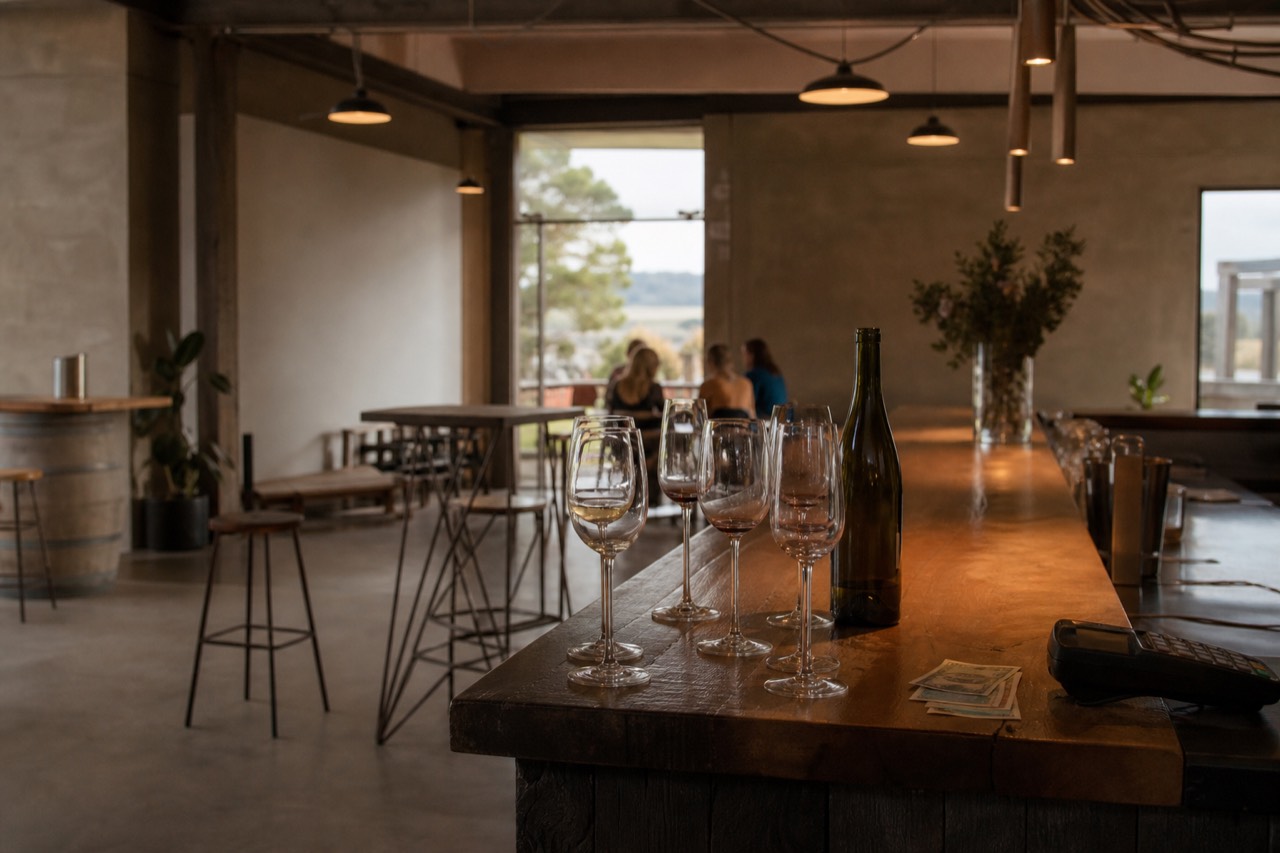
Tipping is one of the few parts of a Napa day nobody prints on the menu. The tasting fee averaged about $79 in 2025, the wine is poured, the card reader spins around, and suddenly you are deciding whether to add a line and how much. The short version: yes, a tip is customary at a Napa tasting room, but it is smaller and more optional than a restaurant tip, and it changes a lot depending on whether you are at a bar, in a seated appointment, or riding with a guide who drove you all day.
Booking choice: A guided winery day bundles transport and lunch, while tasting fees and optional tips remain separate. Explore The Three-Winery Day
Do you tip at a winery tasting in Napa?
A tip is appreciated at a Napa tasting room, but it is generally discretionary. Visit Napa Valley currently suggests $10–15 per couple for a standing tasting and $15–20 per couple for a seated tasting. Treat those as guidance, check for any service charge, and adjust for the attention you received.
The reason it feels ambiguous is that a tasting is a hybrid. You are paying a fee for the wine, which is unlike a bar tab, but a knowledgeable host is also spending real time with you, which is like table service. Most regular visitors settle it by tipping modestly when the host was genuinely engaged and skipping it without guilt at a quick, transactional bar pour. Local guides who write about tipping in Napa tasting rooms describe the same norm: welcome, not obligatory.
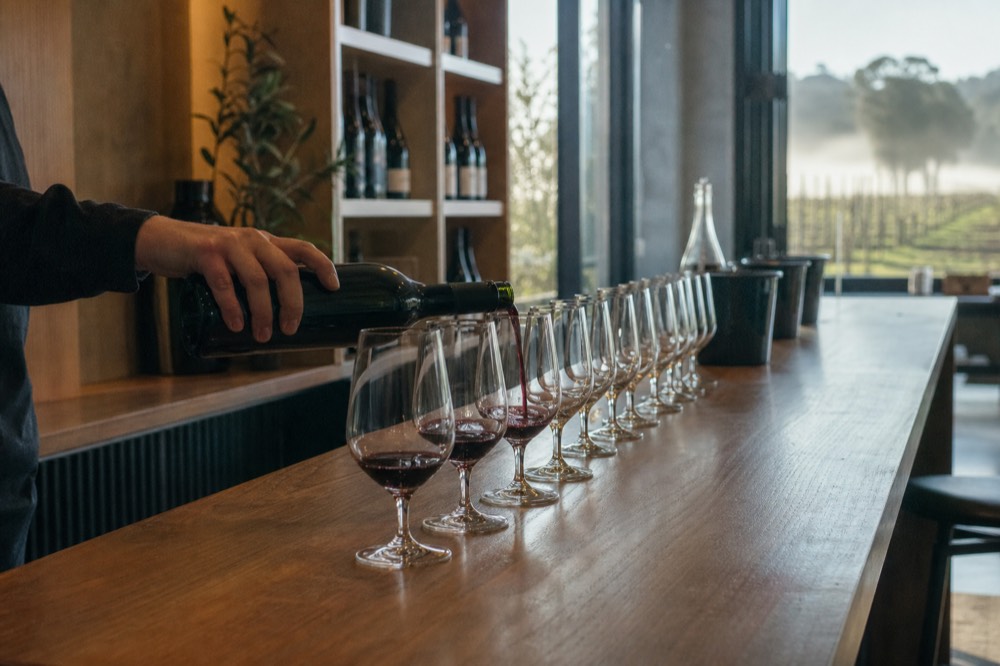
Your tasting-room host and your tour guide do different jobs. Keep their optional gratuities separate from the tour fare and winery tasting fees.
How much do you tip in a tasting room?
For a practical starting point, Visit Napa Valley suggests $10–15 per couple for standing tastings, $15–20 per couple for seated tastings, and $20 or more per couple for boutique or private experiences. These are suggestions, not a compulsory percentage of your bill.
The sliding scale tracks effort. A busy bar where one pourer is serving twenty people is closer to a coffee-counter tip, small or skipped. A seated appointment where a host walks you through five wines, answers questions, and tailors the flight is closer to a service you tip properly. The dollar amounts stay modest by restaurant standards because you already paid a real fee, which for many estates lands in the $50 to $90 range for a standard tasting.
| Tasting type | Suggested Guidance (Visit Napa Valley) | When it applies |
|---|---|---|
| Bar or standing pour | $10–15 per couple suggested | Quick, crowded, self-serve style |
| Standard seated tasting | $15–20 per couple suggested | A host walks you through the wines |
| Longer, private, or food-paired | $20+ per couple suggested | An hour-plus of dedicated attention |
| Reserve or library experience | Discretionary; check service charges | Premium, high-touch, often with a tour |
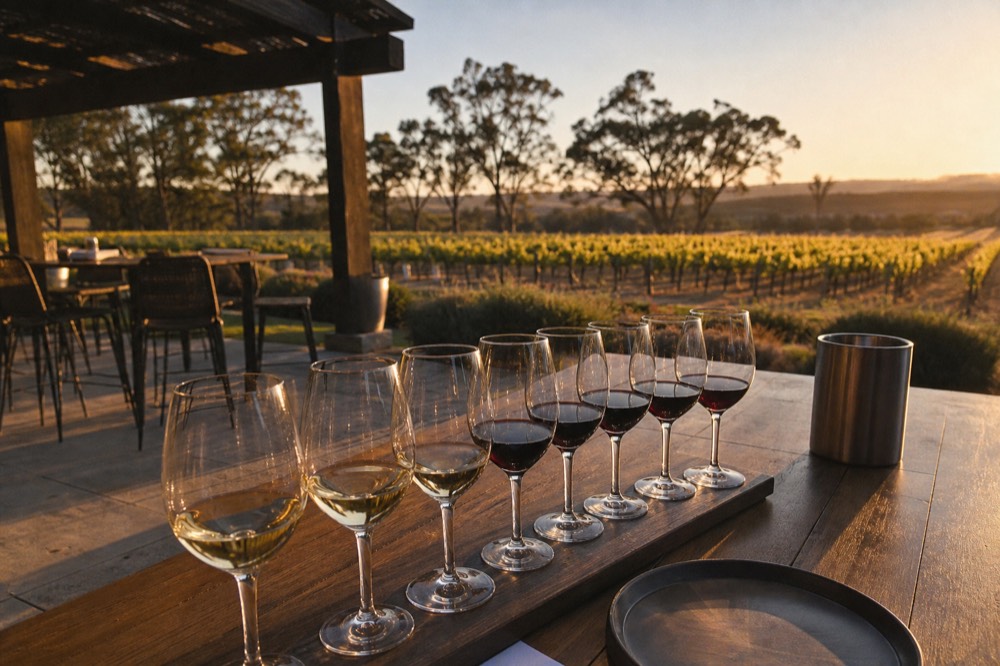
None of this is policed. Nobody chases you for a tip at a winery, so treat these as a guide to doing right by a host who earned it, not a bill to settle. Napa's tasting etiquette is relaxed in general, which what winery etiquette actually means covers beyond just the money.
The trolley fare includes transport, a guide and lunch. Winery tasting fees and gratuities are extra, so leave space for both in your total.
Do you tip your wine tour guide or driver?
A guide or driver may receive a larger gratuity because they look after a full day, but the amount is discretionary unless the booking terms specify a service charge. A percentage and a flat dollar tip are different budgeting methods; neither is a universal requirement.
Think of the two tips as separate decisions: one for tasting-room service and one for a guide or driver. Check whether the tour already adds a gratuity. A 20% tip on a $150 fare would be $30, simply an arithmetic example rather than a current price or compulsory amount.
The small-group winery day includes a driver-guide, three winery stops and a picnic lunch. Tasting fees and optional gratuities are additional; a tour does not reduce every service interaction to one required tip.
Does a waived tasting fee change what you tip?
Not really. If a winery credits your tasting fee toward a bottle you buy, that is a discount on the wine, not a reason to skip the host's tip. The tip rewards the service and the time, which you received either way. Many Napa estates waive or credit the fee with a bottle or club sign-up, so treat the waiver as a bonus and tip on the experience, not the receipt.
The waiver culture is real and worth using. Visit Napa Valley notes that fees are commonly credited toward a purchase or membership, which can erase a $79 fee if you were going to buy a bottle anyway. But that saving is between you and the winery's pricing, and it does not touch the host who poured for you. If anything, a host who set you up with a wine you loved and saved you the fee has earned the small gratuity more, not less.
| Situation | What to tip | Why |
|---|---|---|
| Fee waived on a bottle purchase | Same modest tip as normal | The service was identical |
| Fee credited to a club sign-up | Same modest tip | The host still gave you the time |
| Comped tasting (club member, trade) | A small thank-you tip | Courtesy for the pour and attention |
| Guide arranged everything | Check service charges before adding a discretionary tip | They did the day's real work |
The fee, the waiver, and the tip are three separate things. Once you see them that way, the decision gets simple: use the waiver, buy what you like, and leave a small tip for a host who earned it. For how the fees and reservations themselves work, Napa winery reservations and tasting fees has the full picture.
When is it okay not to tip?
It is fine to skip a tip at a quick, crowded, self-serve, or highly transactional bar pour where nobody spent real time with you. Tipping is optional at tasting rooms, so no host expects it after a rushed two-minute flight. Save your money for the seated appointments where a host truly hosted you, and for the guide or driver at the end of the day.
Tasting-room tips are discretionary unless a service charge is disclosed. You can thank a helpful host without following a fixed percentage; for a guide or driver, check the booking terms before deciding on any additional gratuity.
Your Napa booking choice
Choose Your Napa Experience
Starting recommendation. Open the choices below to narrow your day.
Compare A Hosted Day And Your Full Budget
This screens only the details you enter. Health, language, pickup and all remaining operator restrictions still need confirmation. Time allowances exclude your journey to the meeting point.
- Napa Valley Small Group Winery Tour — Visit three boutique wineries with a driver-guide and picnic lunch. About 7 hours Extras: Tasting fees; Optional gratuity. Ages 21+.
- Napa Valley Wine Trolley Classic Tour — Ride between Napa wineries in an open-air trolley with lunch included. About 6.5 hours Extras: Tasting fees; Gratuity. Ages 21+.
- 6 Hour Napa or Sonoma Valley Wine Tour by Private SUV — Shape a private winery route for up to six with your own SUV and driver. Confirm the duration of your chosen option Extras: Tasting fees; Gratuity; Fuel surcharge; Distant pickup travel fees. Confirm age and winery admission rules. Confirm booked duration, pickup, winery reservations and all additional fees.
Compare your actual party totals
Enter current quotes in the same currency. “Separate spending” means costs you would actually avoid, not a rental day you still pay for.
Napa Valley Small Group Winery Tour
Have your travel date in mind? Check it before arranging the rest of the day. Visit three boutique wineries with a driver-guide and picnic lunch.
About 7 hours. Napa Valley hotel pickup or Main Street & 5th Street, Napa; confirm pickup time.
Extras: Tasting fees; Optional gratuity. Ages 21+.
Schedule loading. You can still check dates directly on Viator below.
Scheduled dates are not confirmed seats. Select the same date on Viator to confirm availability and the final price.