Napa vs Sonoma: Which Wine Country Is Right for You
They sit side by side, they both make world-class wine, and they are not the same trip. Here is how Napa and Sonoma really differ, and how to pick, or do both.
Short answer
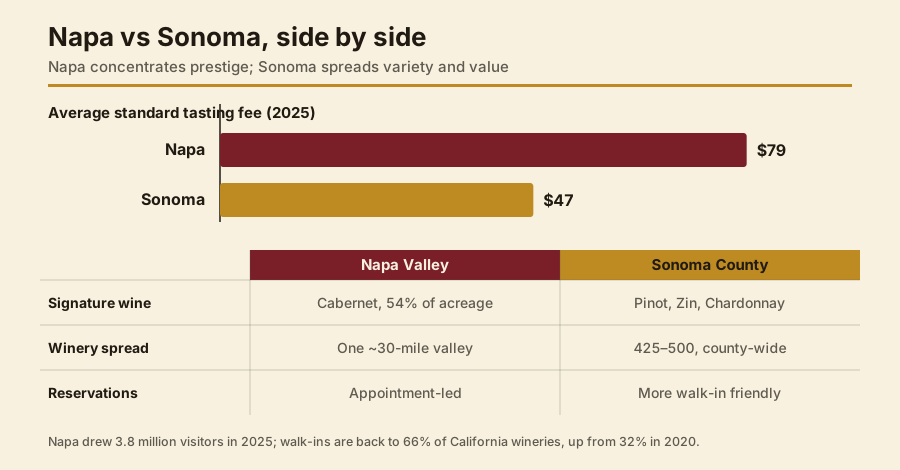
Napa is compact, polished and Cabernet-driven, with seated appointments and an average tasting fee near $79. Sonoma is larger, more spread out and more casual, with lower fees near $47 and more walk-in rooms. Choose Napa for big-name reds and a tight route, Sonoma for variety and a slower pace, or take a combo tour and sample both in a day.
Two valleys, one county line between them, and a surprisingly different day depending on which side you land on. Napa's average standard tasting fee ran about $79 in 2025; Sonoma's sat closer to $47. Napa books you into seated appointments along a single 30-mile strip; Sonoma spreads several hundred wineries from the coast to the town square and hands out more walk-in tables. Neither is better. They answer different questions, and the honest job of this page is to tell you which one your trip is actually asking.
Booking choice: A full-day coach trip from San Francisco lets you sample Napa and Sonoma with the standard winery tastings included. Explore the two-region wine day
Sonoma is a separate wine region from Napa, a whole county to the west with its own towns, its own grapes and its own mood. People blur the two because they are neighbors and both sit an hour or so from San Francisco. The operators we work with treat them as two distinct trips, and the tours that cover both are labeled Napa and Sonoma for exactly that reason.
Napa vs Sonoma: which should you choose?
Pick Napa for concentrated prestige: Cabernet Sauvignon, marquee estates, and a compact valley you can tour in a tight loop, at higher fees and mostly by appointment. Pick Sonoma for range and ease: Pinot Noir, Chardonnay, old-vine Zinfandel, lower fees, more walk-in rooms, and a slower, more rural feel across a much bigger area. Torn? A combo tour samples both in one day.
The short version is that Napa trades a little spontaneity for polish and a very short driving radius, while Sonoma trades polish for variety, value and elbow room. First-time visitors chasing the famous Napa Cabernets usually start in Napa. Repeat visitors, budget-minded groups, and anyone who prefers a barn to a chateau often drift toward Sonoma. Plenty of people want both, which is where the combo tours from the city earn their keep.
Your starting point matters as much as the region: the combo coach leaves from San Francisco, while the Napa small-group and private SUV options begin locally. Compare the format after deciding which region you want to explore.
What is the real difference between Napa and Sonoma?
Napa is the smaller, more famous, more formal region: one narrow valley, Cabernet-dominant, appointment-heavy, and pricier per taste. Sonoma is the larger, more laid-back county next door: many sub-regions from the Russian River to the coast, a wider spread of grapes, more casual tasting rooms, and lower fees. Napa is a focused day; Sonoma is a choose-your-own-adventure spread over more ground.
Geography sets the tone. Napa Valley's floor is only about 30 miles long and 5 miles wide, so its wineries line up along Highway 29 and the Silverado Trail and you drive up the valley once. Sonoma County covers far more land, and its wineries scatter across the Sonoma Valley, Dry Creek, the Russian River Valley and out toward the Pacific, which means longer drives between stops but also more variety in a single county.
The cultures grew apart too. Napa leaned into fine dining, architectural tasting rooms and reserve-level Cabernet, and it built the reservation habit early. Sonoma stayed closer to its farm roots, with more family operations, more picnic tables, and a friendlier attitude toward the walk-in. Both make superb wine. They just wear it differently.
The table lines up the headline differences so you can see the trade at a glance.
| Feature | Napa Valley | Sonoma County |
|---|---|---|
| Size and feel | One compact 30-mile valley, polished | Much larger county, rural and spread out |
| Signature wine | Cabernet Sauvignon | Pinot Noir, Chardonnay, Zinfandel |
| Average tasting fee (2025) | About $79 | About $47 |
| Reservations | Mostly appointment or strongly preferred | More walk-in rooms alongside appointments |
| Vibe | Formal, destination, big names | Casual, agricultural, friendly |
| Best for | Marquee reds, a tight route | Variety, value, a slower pace |
Is Sonoma cheaper than Napa?
Generally, yes. Sonoma's average standard tasting fee was around $47 in 2025 against roughly $79 in Napa, and Sonoma has more free or low-cost, walk-in-friendly rooms. Lodging and dining tend to run a little gentler too. Napa is not outrageous, but its fees, its reserve experiences and its higher room rates make it the pricier region taste for taste.
Fees are where the gap shows up fastest. In Napa a standard seated flight commonly lands between $50 and $90, with reserve and food-paired experiences climbing past $100 and often past $200. Sonoma has plenty of $20 to $40 tastings and a healthier share of rooms that waive the fee on a bottle. Across both regions the slowdown of the last couple of years pushed prices down a touch: roughly 30 percent of wineries in each county trimmed their fees in 2025, per San Francisco Chronicle reporting.
That said, the fee is only one line of the bill. Once you add a driver, lunch and tips, the two regions converge more than the tasting sticker suggests. If you are pricing a full day rather than a single flight, what a Napa wine tour really costs breaks the numbers down line by line, and most of that math applies to a Sonoma day as well.
| Cost line | Napa | Sonoma |
|---|---|---|
| Entry / boutique flight | $20 to $50 | $15 to $35 |
| Standard seated tasting | $50 to $90 | $25 to $60 |
| Reserve / library / food-paired | $100 to $200+ | $60 to $125+ |
| Average standard fee (2025) | About $79 | About $47 |
| Fee waived on a bottle? | Common | Common, and more free rooms |
The standard full-day coach from San Francisco includes three winery tastings across the Napa-and-Sonoma route. Lunch and gratuity are extra, so the useful comparison is the complete day’s cost rather than the tasting-fee average alone.
Which region is easier to reach from San Francisco?
Both are close. Downtown San Francisco to the city of Napa is about 47 miles, typically an hour to an hour and twenty, via I-80, CA-37 and CA-29. Sonoma's southern towns are a comparable drive of roughly an hour from the city, traffic depending. Neither is far, but Bay Area traffic can push either to 1.5 or 2 hours on a bad morning, which is why leaving early matters more than the region you pick.
For a first trip the drive is close enough to be a tie. From the city you point roughly north for both, and the real variable is traffic across the bridges and CA-37 rather than the destination. Sonoma County's spread means your first winery there could be near the town plaza or an hour deeper toward the coast, so a Sonoma day can involve more driving inside the region even when the trip out is similar.
This is the single strongest argument for handing off the wheel. California's legal limit is 0.08 percent blood alcohol under California Vehicle Code Section 23152, a day of flights crosses it easily, and both regions string their wineries miles apart with no sidewalks between them. Whether you choose Napa, Sonoma or both, someone sober has to drive, or a guide does it for you. The logistics of coming up from the city are covered in more depth in Napa wine tours from San Francisco.
| From downtown SF | Rough distance | Typical drive | Route |
|---|---|---|---|
| City of Napa | About 47 miles | 1h to 1h20 | I-80 to CA-37 to CA-29/121 |
| Yountville (up-valley Napa) | About 56 miles | About 1h7 | I-80 to CA-37 to CA-29 |
| Southern Sonoma towns | Roughly similar | About an hour | US-101 or CA-37 corridors |
| Worst-case, either region | Same distances | 1.5 to 2h+ | Heavy bridge and CA-37 traffic |
Which wine is each region known for?
Napa is Cabernet country. Cabernet Sauvignon is about 54 percent of Napa's planted acreage, and the region's fame rests on powerful, age-worthy reds. Sonoma is more of a mixed bag by design: cool-climate Pinot Noir and Chardonnay in the Russian River Valley, bold old-vine Zinfandel in Dry Creek, plus Cabernet, Sauvignon Blanc and sparkling wine. Napa goes deep on one grape; Sonoma goes wide.
If a single varietal is your reason for the trip, that alone can pick the region. Napa's Cabernet dominance is not an accident of marketing; the valley's warm benchland sites and the 1976 Judgment of Paris, where a Napa Cabernet beat the top Bordeaux in a blind tasting, cemented its reputation for reds. Sonoma's cooler pockets near the coast do things Napa's warmer floor cannot, which is why serious Pinot Noir and crisp Chardonnay are Sonoma signatures.
For visitors that difference is freeing. In Napa you can spend a day comparing Cabernets from Oakville, Rutherford and Stags Leap and never get bored. In Sonoma you might start with sparkling, move to Pinot, and finish on Zinfandel, all in the same county. If Napa's appellations intrigue you, the Napa AVAs and sub-appellations map shows how the sub-regions shape the reds.
| Grape or style | Napa Valley | Sonoma County |
|---|---|---|
| Cabernet Sauvignon | Signature, ~54% of acreage | Present, strong in warmer areas |
| Pinot Noir | Limited, cooler pockets | Signature (Russian River, coast) |
| Chardonnay | Common | Signature, cool-climate style |
| Zinfandel | Some | Signature, old-vine Dry Creek |
| Sparkling wine | Yountville and Carneros | Widespread, notably Green Valley |
Which region has a more relaxed, walk-in vibe?
Sonoma, clearly. It has more casual, family-run tasting rooms, more places that welcome a walk-in, and a rural feel that many people find easier to enjoy. Napa is more formal and appointment-led, though it has loosened: the share of California wineries taking walk-ins rose to 66 percent in 2024 from 32 percent in 2020. Downtown Napa's tasting rooms are the exception, friendly to drop-ins.
The reservation gap is real but shrinking. Napa built its appointment culture around county permits and seated-tasting formats, and its top estates still run strictly by booking. Sonoma never leaned as hard into that model, so it kept more room for spontaneity. If your ideal day is wandering from door to door without a schedule, Sonoma bends to that better. If you want a guaranteed seat at a famous name, Napa's system, once you have booked, delivers it reliably.
Downtown Napa splits the difference. The city itself, around the Oxbow area and First Street, is dense with walk-in tasting rooms pouring wines from up and down the valley, which is a genuinely easy, low-planning way to sample Napa without a single appointment. For the etiquette of either region, the winery etiquette basics cover swirling, spitting and tipping.
A private vehicle can connect wineries selected around your preferences, but reservations and route feasibility must be confirmed. The featured SUV starts in the Napa area, takes up to six passengers and excludes tasting fees. Confirm the booked service length with the operator.
Can you visit both Napa and Sonoma in one day?
Yes, and a guided combo is the sensible way to do it. Because the two regions sit side by side, a full-day Napa and Sonoma tour from San Francisco typically fits a stop or two in each, with the driving, the route and the reservations handled. Self-driving both in a day is doable but tight, since Sonoma's spread and the county-to-county hop eat time. A combo trades depth for breadth: a real taste of each, not a deep dive into either.
The honest trade-off is time. Devote a day to Napa alone and you can savor three seated tastings without rushing. Split that day across two regions and you are sampling rather than settling in. For a first visit that wants the contrast, sampling both is often exactly right; for a wine lover chasing specific estates, one region per day is the better use of the hours.
These combos are always labeled Napa and Sonoma for a reason: they are two separate regions on one itinerary, not a single blurred "wine country." Knowing that going in helps you set expectations. You will feel the shift when the polished Napa estate gives way to a rangier Sonoma room after lunch. To judge whether a day trip is even enough time, can you do a day trip to Napa from SF weighs the clock.
The verified Gray Line coach provides a set Napa-and-Sonoma route with three winery tastings on its standard option. It leaves from San Francisco meeting points, carries up to 50 travelers and excludes lunch and hotel pickup.
Which is better for a first-time visitor?
For most first-timers, Napa. It packs the famous names into a short, easy-to-tour valley, so a single day delivers a strong sense of what wine country is about. Sonoma rewards a second visit, or a traveler who already knows they prefer casual rooms, Pinot Noir, and a slower rural day. If you only get one day and want the icons, start in Napa; if you have more time or a smaller budget, add or switch to Sonoma.
There is a reason Napa is the default first stop. Its compactness means a first-timer is not gambling on long drives, its reservation system, once booked, removes uncertainty, and its Cabernets are the wines most people arrive wanting to try. The polish that some seasoned visitors find a touch formal is exactly what makes a first Napa day feel like an occasion.
Sonoma comes into its own once the novelty of the marquee names has worn off, or when the trip is about relaxing rather than ticking off icons. Couples on a quiet weekend, groups watching the budget, and anyone who would rather picnic than dress up tend to prefer it. Booking Napa Valley CA Wine Tours for a first visit usually means a Napa-focused day, with Sonoma held back as the reason to come again.
| Traveler | Better fit | Why |
|---|---|---|
| First-timer chasing icons | Napa | Famous Cabernets, compact valley, one easy day |
| Budget-minded group | Sonoma | Lower fees, more free and walk-in rooms |
| Couple wanting calm | Sonoma | Rural pace, picnic-friendly, less formal |
| Cabernet devotee | Napa | Deep bench of world-class reds |
| Pinot or Zinfandel fan | Sonoma | Cool-climate Pinot, old-vine Zin |
| Wants both in a day | Combo tour | A real taste of each, driving handled |
How do guided tours handle Napa versus Sonoma?
Guided tours smooth over the differences that make each region tricky to self-drive. In Napa they hold the appointments and drive the tight up-valley route. In Sonoma they absorb the longer distances between spread-out wineries. Combo tours from San Francisco do both, labeling the day Napa and Sonoma and handing you a stop or two in each. Whichever region, the tour solves the two hard parts: the driver and the bookings.
The value shifts slightly by region. In Napa the biggest gift a tour gives is the reservations and the driver, since booking marquee estates and staying under the limit are the real friction points. In Sonoma the biggest gift is the routing, because its wineries are farther apart and a stranger can waste an afternoon on wrong turns. A combo tour delivers both benefits at once, which is why it is the most popular way to see both regions from the city.
Cost tracks the format more than the region. A shared combo coach is the budget end, a small-group day sits in the middle, and a private SUV is the premium, priced per group. If you are weighing whether any guided day beats driving yourself, are winery tours worth it runs the honest comparison.
| Tour type | Covers | Roughly | Best for |
|---|---|---|---|
| Combo coach (Napa and Sonoma) | Both regions, set route | On the listing | Budget, first-timers, both in a day |
| Small-group day | One region in depth | Date-specific per-person quote; tasting fees extra | Value, social, deeper visit |
| Private SUV or van | Either or both, custom | Priced per group | Couples, full control, mixed itinerary |
| Self-drive | Whatever you book | Fees plus gas | One sober driver, heavy planning |
So, Napa or Sonoma?
If you want the icons, the Cabernet and a compact day, choose Napa. If you want variety, value and a relaxed rural pace, choose Sonoma. If you cannot decide and you are coming from San Francisco, take a combo tour and let one day show you both. There is no wrong pick here, only the region that fits the trip you actually want.
The clean way to decide is to name your priority. Prestige and reds point to Napa. Range and ease point to Sonoma. Curiosity about the contrast points to a combo. And a specific estate or grape often makes the choice for you before any of the general reasoning does. Hold your first reservation, or book a tour that holds it for you, and build the day out from there.
Whatever you choose, the mechanics are the same: book ahead, sort a sober driver, keep it to three or four wineries, and let the region set the mood. Napa will feel like an event. Sonoma will feel like a long, easy exhale. Both are worth the trip, and plenty of people end up doing both, one valley at a time.
Frequently asked questions
Is Napa or Sonoma better for a first-time visitor?
For most first-timers, Napa. It concentrates the famous names in a compact 30-mile valley, so a single day gives a strong, easy sense of California wine country. Sonoma is often the better second visit, or the pick for travelers who already know they prefer casual rooms, lower fees and a slower rural pace.Is Sonoma cheaper than Napa?
Generally yes. Sonoma's average standard tasting fee was around $47 in 2025 against roughly $79 in Napa, and Sonoma has more free and walk-in-friendly rooms. Once you add a driver, lunch and tips, though, a full day in either region ends up closer than the tasting-fee gap alone suggests.Can you visit both Napa and Sonoma in one day?
Yes. Because the two regions sit side by side, a full-day combo tour from San Francisco usually fits a stop or two in each, with the driving and reservations handled. It is a taste of both rather than a deep dive into either. Self-driving both in a day is possible but tight, given Sonoma's spread.What is the main difference between Napa and Sonoma wine?
Napa is Cabernet country, with powerful, age-worthy reds making up the bulk of its fame and about 54 percent of its planted acreage. Sonoma is more varied, known for cool-climate Pinot Noir and Chardonnay near the coast and old-vine Zinfandel in Dry Creek. Napa goes deep on one grape; Sonoma goes wide.Do you need reservations in Sonoma like you do in Napa?
Less so. Sonoma has more walk-in-friendly tasting rooms and a more casual culture, so spontaneity is easier there. Napa is more appointment-led, though it has loosened, and downtown Napa's tasting rooms welcome walk-ins. For marquee estates in either region, booking ahead is still the safe move.Your Napa booking choice
Choose Your Napa Experience
Starting recommendation. Open the choices below to narrow your day.
Both regions from SF, Napa from a local hotel, or your own winery list?
This screens only the details you enter. Health, language, pickup and all remaining operator restrictions still need confirmation. Time allowances exclude your journey to the meeting point.
- Napa and Sonoma Wine Country Full-Day Tour from San Francisco — Visit Napa and Sonoma from San Francisco with coach transport and standard-option tastings included. About 8–9 hours Extras: Lunch and additional food/drinks; Gratuity. Confirm age and winery admission rules.
- Napa Valley Small Group Winery Tour — Visit three boutique wineries with a driver-guide and picnic lunch. About 7 hours Extras: Tasting fees; Optional gratuity. Ages 21+.
- 6 Hour Napa or Sonoma Valley Wine Tour by Private SUV — Shape a private winery route for up to six with your own SUV and driver. Confirm the duration of your chosen option Extras: Tasting fees; Gratuity; Fuel surcharge; Distant pickup travel fees. Confirm age and winery admission rules. Confirm booked duration, pickup, winery reservations and all additional fees.
Compare your actual party totals
Enter current quotes in the same currency. “Separate spending” means costs you would actually avoid, not a rental day you still pay for.
Napa and Sonoma Wine Country Full-Day Tour from San Francisco
Have your travel date in mind? Check it before arranging the rest of the day. Visit Napa and Sonoma from San Francisco with coach transport and standard-option tastings included.
About 8–9 hours. San Francisco meeting points: Union Square or Fisherman's Wharf; 08:40 listed.
Extras: Lunch and additional food/drinks; Gratuity. Confirm age and winery admission rules.
Schedule loading. You can still check dates directly on Viator below.
Scheduled dates are not confirmed seats. Select the same date on Viator to confirm availability and the final price.