Napa Wine Tours from San Francisco
Napa is close enough to San Francisco for an easy day out, about 47 miles and an hour or so up the freeway, once you sort the one thing a wine day cannot skip: a sober driver.
Short answer
Napa sits about 47 miles from downtown San Francisco, typically an hour to an hour and twenty via I-80, CA-37 and CA-29, up to two hours in bad traffic. Leave by 8 or 9 a.m. since wineries open around 10. A guided tour or private driver is the norm because California's limit is 0.08 percent and estates sit miles apart. Choose a half-day for a taste, a full day for depth, or a combo to add Sonoma.
Downtown San Francisco to the city of Napa is about 47 miles, which sounds like nothing until you remember that everyone on that day is going to drink. That single fact, a short drive and a car full of people who cannot legally drive it home, shapes every sensible way to do Napa from the city. Get the transport right and the rest is easy: leave early, keep it to a few wineries, and let someone else worry about the route and the reservations.
Booking choice: Compare three winery tastings across Napa and Sonoma with the return coach journey from San Francisco included. Explore the Napa and Sonoma coach day
This is the practical guide to coming up from San Francisco: how long the drive really takes, whether to go half-day or full, when to add Sonoma, what time to leave, what it costs, and how to pick the format that fits your day. The wine is the easy part. The logistics are what people get wrong.
Can you visit Napa from San Francisco in a day?
Yes, easily. Napa is about 47 miles from downtown San Francisco, roughly an hour to an hour and twenty by car via I-80, CA-37 and CA-29, so a day trip is not just possible, it is the most common way people first see the valley. Leave the city by 8 or 9 a.m., reach the first winery near its 10 a.m. opening, taste at two to four estates, and be back in the evening. A guided tour makes it effortless; self-driving works only with a sober driver.
The drive is short enough that thousands of visitors do it as a day out rather than an overnight. In 2025, day-trippers were 62 percent of everyone who came to Napa, though because they do not book rooms they accounted for only 12 percent of the spending, according to Visit Napa Valley data. The point stands: a huge share of Napa visits are exactly the day trip you are planning. If the valley wins you over and racing back to the city loses its appeal, turning the day into an overnight in downtown Napa, at a walkable base like the Archer Hotel Napa, buys you a sunset terrace and a slow dinner the day trip never has room for.
Archer Hotel Napa · downtown Napa Check rates ›
What makes it feel effortless or exhausting is the transport decision. A guided tour handles the driving and route; self-driving requires a sober driver plus your own reservations. The verified options below leave from San Francisco meeting points, so include time to reach the departure.
How far is Napa from San Francisco, and how long does it take?
About 47 miles to the city of Napa, typically an hour to an hour and twenty, via I-80 east, CA-37, then CA-29 or CA-121. Up-valley towns add time: Yountville is roughly 56 miles and about an hour and seven. Bay Area traffic is the wild card and can push any of these to 1.5 or 2 hours on a bad morning, which is the real reason to leave early rather than a fixed departure time.
The mileage barely changes; the clock does. On a clear early morning the run can dip under an hour. Hit the bridges, CA-37 or the freeway at the wrong moment and it balloons. Because there is no reliable single number, the honest advice is to plan around the worst case and leave a buffer, not to trust a best-case forty-five minutes.
Where in Napa you are headed matters too. The city of Napa sits at the south end of the valley; the famous up-valley towns, Yountville, Oakville, Rutherford, St. Helena and Calistoga, each add driving on top of the trip from the city. A tour includes the intercity travel in its itinerary; the featured SF coaches start at meeting points rather than your hotel door.
| Destination from downtown SF | Rough distance | Typical drive | Worst-case traffic |
|---|---|---|---|
| City of Napa | About 47 miles | 1h to 1h20 | 1.5 to 2h+ |
| Yountville | About 56 miles | About 1h7 | Up to ~2h |
| Oakville / Rutherford | ~60 to 65 miles | 1h15 to 1h30 | 2h+ |
| St. Helena | ~65 to 70 miles | 1h20 to 1h40 | 2h+ |
| Calistoga (valley's north end) | ~75 miles | About 1h30 | 2h+ |
What is the best way to get from SF to Napa?
A guided tour or private driver is the norm, and for good reason. California's legal limit is 0.08 percent blood alcohol, a day of tasting flights crosses it fast, and Napa's estates sit miles apart with no walking between them. The realistic options are a shared tour, a private car, a designated driver in your own vehicle, or a rideshare-and-taxi patchwork that gets expensive and unreliable up-valley. For most visitors from the city, a tour is the cleanest answer.
Start with the law, because it settles the argument. California Vehicle Code Section 23152 makes it unlawful to drive at 0.08 percent or more, and a tasting flight is four to six pours per winery across three or four wineries. There is no reliable way to self-gauge blood alcohol over an afternoon, so a sober driver is not optional, it is arithmetic.
Rideshare feels like a loophole and mostly is not. Coverage thins the further up-valley you go, wait times stretch, and the meter on a day of hops adds up past what a tour costs, all while nobody is guiding you to good wineries or holding your reservations. That is why the operators we work with build the day around a driver from the start. For the full planning picture beyond the drive, how to plan a Napa wine tour covers bookings, pacing and budget.
| Option | Cost feel | Frees everyone to drink? | Notes |
|---|---|---|---|
| Guided tour from SF | Fixed per person | Yes | Driver, route and often tastings handled |
| Private car or SUV | Priced per group | Yes | Custom route, door-to-door pickup |
| Own car, designated driver | Cheapest | No, one stays sober | You plan route and reservations |
| Rideshare / taxi patchwork | Adds up fast | Yes, if reliable | Coverage thins up-valley, unpredictable |
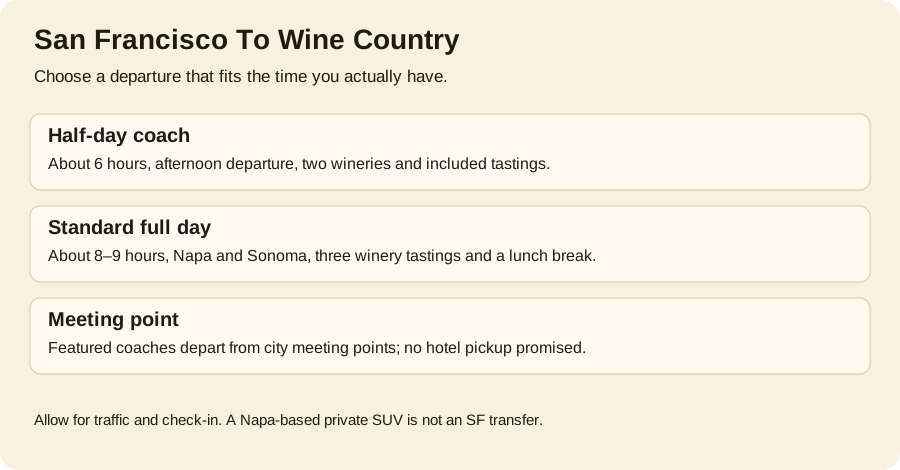
The San Francisco half-day option runs for six hours in the afternoon and visits two Napa wineries with tastings included. It leaves from the Big Bus Visitor Centre at 99 Jefferson Street; hotel pickup and food are not included. Confirm the departure and expected return for your date before booking an evening activity.
Half-day or full-day from San Francisco?
A half-day tour is a taste: the featured SF afternoon option runs six hours and visits two Napa wineries. The featured full-day coach runs about eight to nine hours across Napa and Sonoma with three standard winery tastings. Choose the afternoon for fewer stops or the full day for both regions, and check the return time before reserving dinner.
The trade is depth against time. The featured half-day option devotes six hours to the return journey and two Napa wineries. It suits a shorter sampler, but an afternoon departure does not guarantee an early evening return. The full-day option adds a third winery and Sonoma.
A full day earns the drive. Once you have committed the hour up and back, adding a third and fourth winery costs relatively little extra time and turns the sampler into an experience. Most people who care about the wine, or who traveled a long way to be here, find the full day the better value despite the longer hours. To see how the timing shakes out, the sample plan later on this page maps a full day hour by hour.
| Feature | Half-day from SF | Full day from SF |
|---|---|---|
| Wineries | One to two | Three to four |
| Total time | Six hours on featured option | 8 to 10 hours |
| Lunch | Often not included | Lunch stop planned; meal extra on featured coach |
| Back in city | Confirm dated return time | Evening |
| Best for | A taste, tight schedule | The real valley experience |
Should you do a Napa and Sonoma combo from San Francisco?
A combo is worth it if you want breadth over depth. Because Napa and Sonoma sit side by side, a full-day combo from the city fits a stop or two in each region, labeled Napa and Sonoma because they are two distinct places. You trade a deep dive into one valley for a real taste of both. Great for a first visit that wants the contrast; less ideal if you came for specific Napa estates.
Sonoma is a separate wine region, a whole county to the west with its own grapes and a more casual feel, so a combo is genuinely two trips in one day rather than a longer version of the same one. The tours are always named Napa and Sonoma to make that clear. You will feel the shift when a polished Napa estate gives way to a rangier Sonoma room after lunch, and for many first-timers that comparison is the highlight.
The cost of breadth is depth. Split a day across two regions and you are sampling rather than settling in, with more driving between stops. If you love the idea of comparing the two, it is a smart use of a day; if you have a Napa Cabernet bucket list, keep the day in Napa. The full head-to-head lives in Napa vs Sonoma, which wine country is right for you.
The standard full-day Napa and Sonoma coach tour includes three winery tastings and free time at Sonoma Plaza. Lunch and gratuity are extra, and the route may change. It departs from San Francisco meeting points and can carry up to 50 travelers.
When should you leave, and what does a full day look like?
Leave San Francisco by 8 or 9 a.m. so you reach the first winery near its 10 a.m. opening, taste at two to four estates with lunch in the middle, and head back in the late afternoon for an evening return. A full day runs about 8 to 10 hours door to door. Starting on time is the single biggest lever, because the first reservation anchors everything after it and late departures lose a whole winery to traffic.
The morning departure is not fussiness, it is math. Wineries open around 10, the drive is an hour or more, and reservations are timed, so a 9 a.m. start from the city is already cutting it close for a 10:30 first tasting. Leave at 8 and you have breathing room for traffic and coffee. Leave at 10 and you have lost the morning.
The shape below is close to what a well-run full-day tour delivers, and it doubles as a template if you are driving yourself. The key beats are an early start, a mid-day lunch to reset the palate, and a last winery in mid-afternoon before the drive home.
| Time | Plan |
|---|---|
| 8:30 a.m. | Depart San Francisco, coffee for the road |
| 10:00 a.m. | First Napa winery, seated tasting booked ahead |
| 11:30 a.m. | Second winery, a contrasting style |
| 1:00 p.m. | Lunch, a picnic or a Yountville table |
| 2:30 p.m. | Third winery, the day's showpiece |
| 4:00 p.m. | Optional short fourth stop |
| 5:00 to 6:00 p.m. | Drive back to the city, bottles in the boot |
How much do Napa tours from San Francisco cost?
It depends on the format and date. Shared coach tickets are priced per person, while private transport may be quoted per vehicle. Compare the complete amount for your party, including any excluded tasting fees, lunch and gratuity. A quote is only useful once its departure point, duration and inclusions match your plan.
The featured tours show date-specific prices on their booking pages. The figures below are illustrative budgeting examples from this article’s August 2026 edition, not current offers or evidence that one format is cheaper. Compare quotes for the same party size, travel date and inclusions.
Whatever the ticket, the full day has four cost lines: the tour or transport, tasting fees if they are not baked in, lunch, and tips. A tour that includes tastings quietly closes the gap with self-driving once you add those fees back in. For the complete breakdown, how much a Napa wine tour costs walks through every line and what pushes the total up.
| Tour type from SF | Rough price | Usually includes |
|---|---|---|
| Shared coach / large group | ~$120 to $160 pp (illustrative example, not a current quote) | Transport, some tastings |
| Small-group day | ~$150 to $200 pp (illustrative example, not a current quote) | Transport, tastings, sometimes lunch |
| Private car or SUV | From ~$399 pp or $600 to $1,200+ per group (illustrative example, not a current quote) | Custom route, door-to-door pickup |
| Half-day sampler | On the listing | Transport, a taste of the valley |
Which SF-to-Napa tour should you choose?
Match the format to your day. The six-hour afternoon coach is a Napa sampler; the full-day coach adds Sonoma and three standard winery tastings. A private vehicle suits a custom route, but the featured SUV starts locally and excludes San Francisco pickup. Self-driving requires a sober driver and your own winery reservations.
There is no single best tour, only the best fit for your group, budget and time. The verified choices here are a six-hour Napa afternoon or a full-day Napa-and-Sonoma coach. A private local tour requires a separate plan for reaching Napa.
Booking Napa Valley CA Wine Tours from the city comes down to how much of the day you want to give Napa and how much control you want over the route. Once that is clear, the format picks itself. If you are still deciding whether a day trip is even enough, can you do a day trip to Napa from SF makes the case.
For couples or a small group already staying in Napa, a private vehicle offers a route based on your requested wineries. It is a different starting-point choice from the coach trips out of San Francisco.
The featured private SUV takes up to six passengers and offers Napa-area pickup, not San Francisco pickup. A custom route can follow your requested wineries, with tasting fees, gratuity, fuel surcharge and any applicable travel fees extra. Confirm the booked service length: the six-hour title conflicts with twelve-hour duration metadata.
| Format | Group size | Pace | Roughly | Best for |
|---|---|---|---|---|
| Half-day from SF | Shared coach | Two wineries on featured afternoon option | On the listing | Short on time, a first taste |
| Small-group full day | About 6 to 14 | Three or four wineries | ~$150 to $200 pp (illustrative example, not a current quote) | Value, social, the real day |
| Private SUV or van | Your party | Fully custom | Priced per group | Couples, groups, full control |
| Napa and Sonoma combo | Shared coach or van | A stop or two each region | On the listing | Breadth, comparing both |
What should you know before you go?
Eat a real breakfast, dress smart-casual with comfortable closed shoes, skip strong fragrance, and bring water, sunscreen and a layer. Confirm what your tour includes, especially tasting fees and lunch, so the price on the day matches the price you booked. And build in traffic buffer both ways, because the drive from the city is the part most likely to run long.
None of this is complicated, but small things save the day. A barrel room sits cool while a terrace bakes, so a layer earns its space. Perfume dulls the aromatics in the glass and bothers the table beside you, so go light. Water between pours is how experienced tasters stay upright through three wineries, especially on a long day that started with an early drive.
The one thing that trips up self-drivers is assuming the return will be quick. Evening traffic back toward the city can be as slow as the morning run, so plan a relaxed departure from your last winery rather than a dash. On a tour this is someone else's problem, which, after a day of wine, is exactly where you want it.
Frequently asked questions
How long does it take to drive from San Francisco to Napa?
About an hour to an hour and twenty for the roughly 47 miles to the city of Napa, via I-80, CA-37 and CA-29. Bay Area traffic can push it to 1.5 or 2 hours on a bad morning, so leave early and plan a buffer. Up-valley towns like Yountville add another ten to twenty minutes.Is a half-day or full-day Napa tour better from San Francisco?
The featured half-day is a six-hour afternoon tour with two Napa wineries; check its dated return time before booking dinner. The featured full-day coach takes about eight to nine hours, visits Napa and Sonoma, and includes three standard winery tastings. Choose according to the time and regions you want.Do I need a tour, or can I drive myself from SF to Napa?
You can self-drive with a designated sober driver who does not drink, while arranging your own winery reservations. Do not use a legal BAC threshold as a drinking allowance. The featured SF coach options handle the intercity driving; the private SUV starts locally in Napa.Can you see Napa and Sonoma in one day from San Francisco?
Yes, with a combo tour. Because the two regions are neighbors, a full-day Napa and Sonoma tour from the city fits a stop or two in each, with the driving handled. It is a taste of both rather than a deep dive into either, which suits a first visit that wants the contrast between the two regions.What time should you leave San Francisco for a Napa day trip?
By 8 or 9 a.m. Wineries open around 10, the drive is an hour or more, and reservations are timed, so an early start means you reach your first tasting on schedule and still have room for traffic. Leaving later usually costs you a whole winery by the end of the day.Your Napa booking choice
Choose Your Napa Experience
Starting recommendation. Open the choices below to narrow your day.
Six-hour Napa afternoon or a full Napa-and-Sonoma day?
This screens only the details you enter. Health, language, pickup and all remaining operator restrictions still need confirmation. Time allowances exclude your journey to the meeting point.
- Napa and Sonoma Wine Country Full-Day Tour from San Francisco — Visit Napa and Sonoma from San Francisco with coach transport and standard-option tastings included. About 8–9 hours Extras: Lunch and additional food/drinks; Gratuity. Confirm age and winery admission rules.
- San Francisco: Napa Valley Half-Day Wine Tour with Tastings — Spend the afternoon at two Napa wineries with tastings and return coach transport from San Francisco. 6 hours Extras: Food; Tips. Ages 21+.
Compare your actual party totals
Enter current quotes in the same currency. “Separate spending” means costs you would actually avoid, not a rental day you still pay for.
Napa and Sonoma Wine Country Full-Day Tour from San Francisco
Have your travel date in mind? Check it before arranging the rest of the day. Visit Napa and Sonoma from San Francisco with coach transport and standard-option tastings included.
About 8–9 hours. San Francisco meeting points: Union Square or Fisherman's Wharf; 08:40 listed.
Extras: Lunch and additional food/drinks; Gratuity. Confirm age and winery admission rules.
Schedule loading. You can still check dates directly on Viator below.
Scheduled dates are not confirmed seats. Select the same date on Viator to confirm availability and the final price.