Napa Valley Wine Tasting: Fees, Reservations & How It Works
A Napa tasting is an appointment with a price now, not a drop-in at a bar. Here is what a flight costs, when the fee disappears, and how the whole thing works today.
Short answer
Most Napa tastings are seated, booked ahead, and charged per person. The reported 2025 average was about $79, while fees and purchase-credit policies vary by winery. The featured Platypus and trolley days arrange visits and transport but leave tasting fees extra.
The average Napa tasting fee reached about $79 in 2025, and most of those pours now happen at a booked table rather than a walk-up bar. That single shift, from casual drop-in counters to seated, reserved, per-person appointments, explains almost everything a first-time visitor finds surprising here. A tasting is a reservation with a price, and the price swings wider than people expect, from a modest entry flight to a reserve experience that costs more than a good bottle.
Booking choice: A three-winery guided day combines arranged visits, a driver and picnic lunch, with tasting fees budgeted separately. Explore Three Boutique Winery Visits
Here is how tasting actually works in Napa today: what a flight includes, when the fee gets waived, the real difference between a seated appointment and a bar pour, how much to tip, and how a guided day folds all of it into a single booking. The operators we work with run this every week, so the picture below is the current reality, not the version from five years ago.
What is a Napa Valley wine tasting, exactly?
A Napa tasting is a guided flight of usually four to six small pours, served either at a seated appointment or a stand-up bar, for a per-person fee. Most estates now take reservations and run seated formats, with fees from roughly $20 for an entry flight to $200 or more for reserve and library experiences. The 2025 average landed near $79.
The word "tasting" covers a lot of ground in this valley. At one end sits a quick flight of small pours at a downtown counter for the price of a couple of glasses. At the other, a two-hour seated appointment with a host, a cellar walk, cheese or a full food pairing, and reserve wines you cannot buy anywhere else. The pour sizes stay small on purpose, usually an ounce or two each, because the point is to compare four to six wines, not to drink a bottle's worth in an afternoon.
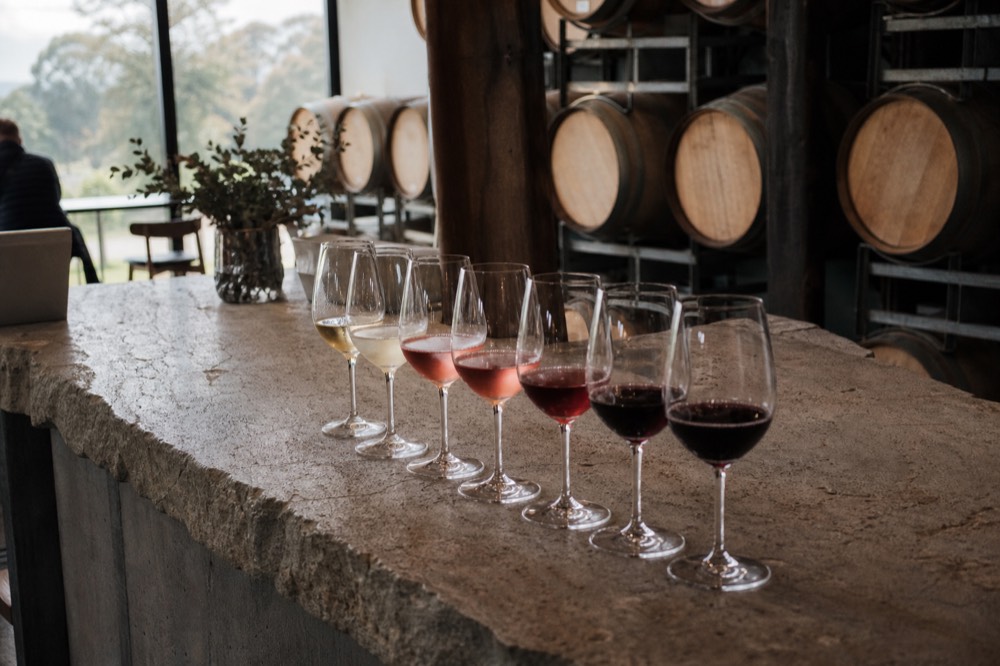
What has changed most is the format. A decade ago you could roll into many Napa tasting rooms and belly up to a bar. Today the seated, reserved appointment is the default at estate wineries, a shift tied to county use permits and capacity rules. That makes the experience calmer and more personal, and it also means the day needs planning that it once did not.
Do you need a reservation to taste wine in Napa?
Book ahead to be safe. Reservations are the norm now, though the walk-in door has reopened: the share of California wineries taking drop-ins climbed to 66 percent in 2024, up from just 32 percent in 2020. Downtown Napa tasting rooms seat walk-ins most readily, while high-end estates above roughly a $70 average bottle stay appointment-only.
The honest rule is to reserve the wineries you care about and leave room for a walk-in or two. In downtown Napa, rooms along Main Street and around Oxbow may seat walk-ins, especially midweek. Famous estates and reserve experiences often need bookings. The reporting on walk-in tasting describes an uneven reopening, so keep confirmed appointments for must-visit wineries.
| Winery type | Reservation reality | Best approach |
|---|---|---|
| Downtown Napa tasting room | Often walk-in friendly | Drop in midweek, book weekends |
| Mid-tier estate | Reservation preferred | Book a day or two ahead |
| Marquee / reserve estate | Appointment-only | Reserve several days out |
| Cellar tour or food pairing | Always booked | Reserve first, plan around it |
A guided route can combine winery appointments and transport, while a private vehicle can follow a separately confirmed estate itinerary.
How much do Napa tasting fees cost?
Napa tasting fees run high and scale by tier: roughly $20 to $50 for entry or boutique flights, $50 to $90 for standard seated estate tastings, and $100 to $200 or more for reserve, library or food-paired experiences. The 2025 average was about $79. Fees are charged per person and per winery, so they add up fast across a day of stops.
Two facts catch first-timers off guard. The fee is per head, so a table of four at a $79 tasting is more than $300 before a bottle is opened. And the fee scales with the experience, not just the wine: a seated flight with a host and a cellar walk costs more than a stand-up pour of the same wines because you are paying for time and attention as much as the liquid. The table below shows what each tier usually buys.
| Tier | Typical fee | What you usually get |
|---|---|---|
| Entry / boutique | $20 to $50 | A flight of 4-6 pours, often at a bar or standing |
| Standard estate | $50 to $90 | A seated, hosted flight of estate wines |
| Reserve / library | $100 to $200+ | Rare or aged wines, often a cellar walk |
| Food-paired / tour | $100 to $250+ | A seated flight with small bites or a full pairing |
There is good news buried in the numbers. The 2025 average of about $79 was actually down a dollar from the year before, and roughly 29 percent of Napa wineries trimmed their fees that year as visitor numbers softened. If a specific estate is on your list, check its current fee when you book, because more of them are negotiable on the experience than they were at the market's peak.
Do wineries waive the tasting fee if you buy wine?
Often, yes. Napa tasting fees are frequently waived, discounted, or credited toward a bottle purchase or a club membership, commonly one or two bottles. If you were planning to buy wine anyway, the fee can effectively vanish. The policy varies by estate and by tier, so ask when you sit down rather than assuming.
The waiver culture is one of the most useful things to understand about Napa pricing, and it quietly changes the value math. A $50 fee that comes off when you buy a $60 bottle you liked is really a $50 credit, not a cost. Reserve and library tastings are less likely to waive fully, but many still credit part of the fee toward a purchase. Visit Napa Valley keeps a running list of tastings under $50 and notes which estates credit the fee, a handy starting point if budget is front of mind.
| Scenario | What usually happens |
|---|---|
| Buy one or two bottles | Fee often fully waived at entry and standard tiers |
| Join the wine club | Fee waived, plus member perks on future visits |
| Reserve or library tasting | Fee sometimes partially credited, rarely fully |
| No purchase | Fee stands as charged |
Seated tasting or bar tasting: what is the difference?
A seated tasting is a hosted, reserved appointment at a table, usually 60 to 90 minutes, with a guide walking you through each pour. A bar tasting is a stand-up flight at a counter, quicker and more casual, more common downtown and at entry tiers. Seated costs more and goes deeper; bar tastings suit a fast, flexible stop.
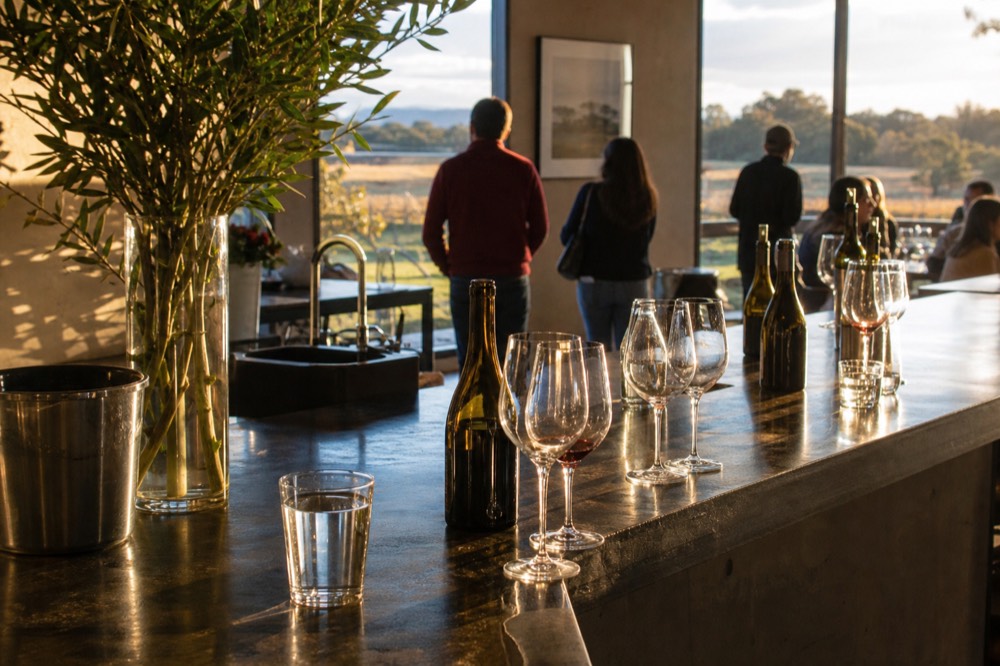
Which one fits depends on your day. A seated appointment is the Napa experience most people picture: unhurried, personal, often with a view over the vines and a host who knows the wines by heart. A bar tasting trades that depth for speed and spontaneity, which is why it survives best in downtown rooms where walk-ins still work. Neither is better; they answer different questions. If you want two or three deep, memorable stops, seat them. If you want to sample widely on a loose schedule, a couple of bar pours between seated visits keeps the day flexible.
| Format | Setting | Typical length | Best for |
|---|---|---|---|
| Seated tasting | Table, reserved | 60 to 90 min | Depth, a hosted flight, a special stop |
| Bar tasting | Stand-up counter | 30 to 45 min | Speed, walk-ins, sampling widely |
| Tour-led tasting | Cellar or vineyard | 90 min plus | Learning how the wine is made |
| Food-paired tasting | Table, reserved | 90 min plus | A meal-length experience |
For a closer look at how the reservation and fee system fits together, our guide to Napa winery reservations and tasting fees breaks down the booking norms and the tipping side in more depth.
How does a guided tasting tour handle the fees and driving?
A guided tour bundles the two hardest parts of a Napa tasting day: the winery route and a driver. On the featured Platypus and trolley tours, lunch is included but winery tasting fees are extra. A fee-inclusive package must explicitly list the tastings in its inclusions.
This is where the logistics stop being your problem. On a guided day the seated appointments are already booked and timed, the route is checked against which cellar doors actually seat visitors that day, and someone else drives between estates that sit miles apart along Highway 29 and the Silverado Trail. The open-air trolley is one of the more relaxed versions of this, threading several wineries together with the driving handled and lunch built in.
The six-hour open-air trolley tour leaves downtown Napa for three winery visits with a guide and lunch. Tasting fees and tips are extra; all guests must be 21 or older.
The boutique-winery alternative uses an enclosed small-group shuttle, rather than the trolley’s open-air vehicle.
The Platypus small-group day visits three boutique wineries with a driver-guide and picnic lunch. Tasting fees and optional gratuity are extra, and the exact wineries can change.
How many tastings can you do in one day?
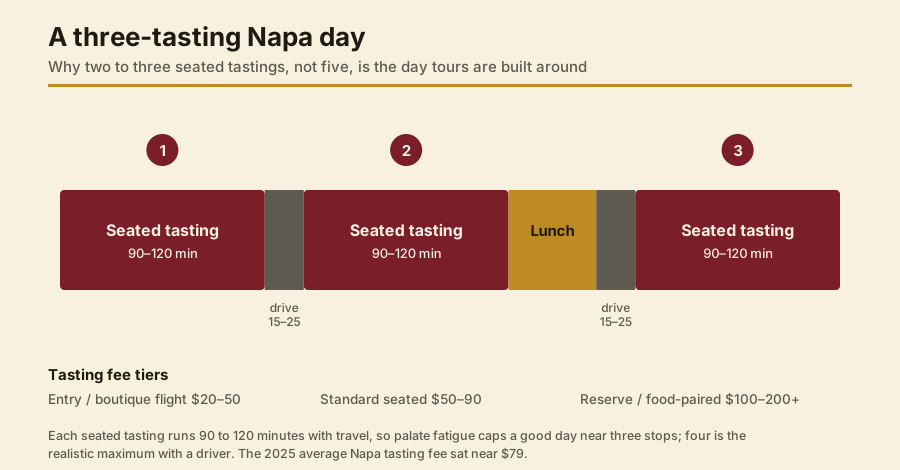
Two to three is the sweet spot, and four is the realistic maximum with a driver and tight timing. Each seated tasting runs 90 to 120 minutes with travel, and palate fatigue is real. Push past four and the day turns into a blur, and your taste buds quit before the wine list does.
The math is about time and your palate, not ambition. A seated flight, a cellar walk, a good conversation, and a bottle to buy and stash all eat the clock, and 15 to 25 minutes of driving separates most estates. Two wineries make a leisurely day with a long lunch. Three is what most well-run tours deliver. Four is for keen tasters who booked tightly and are not driving. The infographic below maps how a three-tasting day actually paces out.
How do you actually taste the wine?
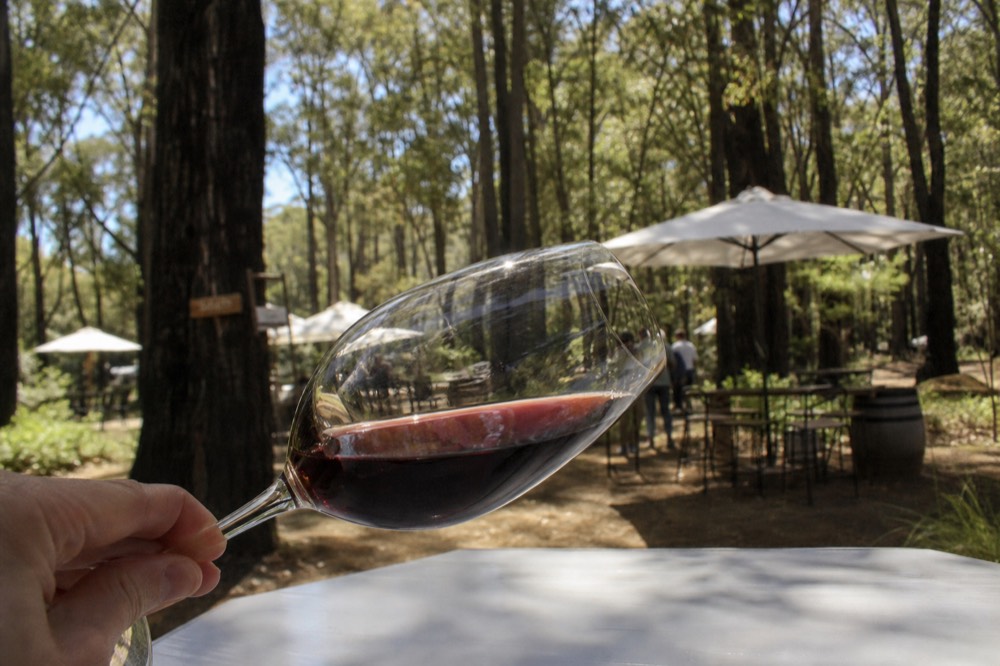
Follow the simple sequence: look, swirl, smell, sip, then either swallow or spit. Hold the glass by the stem, tilt it against something white to read the color, swirl to release the aromas, take a short sniff, then a small sip you move around your mouth. Spitting is completely normal and keeps you clear-headed across several wineries.
None of this is fussy, and no one at the table expects a performance. Swirling looks theatrical but has a real job: it aerates the wine and lifts the aromatics, which is where most of what you "taste" actually happens. The spit bucket, the dump bucket on the bar, is there for a reason. Pouring out what you do not want to finish, or spitting after tasting, is how experienced tasters visit three or four wineries and still enjoy the last one. For the full run of do's and don'ts, including the popular 3-3-3 shorthand, see our take on what winery etiquette really means.
How much should you tip at a Napa tasting?
Tipping is customary but not required. At a standard seated or bar tasting, a flat $5 to $10 per group, or $1 to $2 per pour, is typical. For longer, private or food-paired experiences, think $10 to $20 or more per person. On a guided tour, 18 to 20 percent, or $10 to $20 per person, for your guide or driver is standard.
The norm here is gratitude, not obligation. A host who spent an hour walking your group through the wines, waived the fee on a purchase, and packed your bottles has earned a tip, and most rooms have a jar or a line on the receipt. Tour guides and drivers are a separate tip, closer to what you would leave at a restaurant, because they handled the whole day. The table sorts the rough numbers.
| Who | Typical tip |
|---|---|
| Standard tasting-room host | $5 to $10 per group, or $1 to $2 per pour |
| Longer, private or food-paired | $10 to $20+ per person |
| Tour guide or driver | 18 to 20%, or $10 to $20+ per person |
For the full breakdown of when and how much, our guide to tipping at a Napa wine tasting covers every situation.
Which Napa tasting experience should you choose?
Match the format to your day. A downtown room suits a casual, walk-in-friendly afternoon. A seated estate appointment is the deep, classic Napa tasting. An open-air trolley or small-group tour hands off the reservations and the driving. A private tour shapes the whole day around your list. Self-guided tasting works only with a designated driver.
There is no single best answer, only the right fit for your group and budget. If you want to taste widely with zero planning, a trolley or small-group day solves it. If you want a couple of deep, seated appointments at estates you have researched, book those directly and sort a driver. The comparison below lines up the trade-offs so you can pick before anything gets booked.
The Classic trolley is a scheduled guided day from downtown Napa with winery reservations and lunch included. It is not a hop-on service; tasting fees and tips are separate.
| Experience | Setting | Roughly | Best for |
|---|---|---|---|
| Downtown tasting room | Walk-in counter | $20 to $50 per person | Casual, flexible, no driving up-valley |
| Seated estate appointment | Reserved table | $50 to $200+ per person | The deep, classic Napa tasting |
| Open-air trolley or small-group | Guided, driver | Current dated fare, plus any excluded tasting fees | Tastings with zero planning |
| Private tour | Custom, door-to-door | Priced per group | Couples and groups wanting control |
To choose which estates are worth the seated fee in the first place, our shortlist of the best wineries in Napa Valley to visit sorts them by style and by which a tour can actually reach.
With the fees understood, the waivers in your favor, and the driving handed off, a Napa tasting day stops being a puzzle of booking pages and becomes what it should be: a few good pours, a long lunch, and a route someone else worked out.
Frequently asked questions
How much is a wine tasting in Napa Valley?
Expect roughly $20 to $50 for an entry flight, $50 to $90 for a standard seated estate tasting, and $100 to $200 or more for reserve, library or food-paired experiences. The 2025 average was about $79 per person. Fees are charged per person and per winery, so a day of stops adds up, but they are often waived against a bottle purchase.Do I need a reservation to taste wine in Napa?
Book ahead to be safe. Reservations are the norm at estate wineries, though more rooms take walk-ins than a few years ago, with the share of California wineries accepting drop-ins back up to 66 percent in 2024. Downtown Napa tasting rooms are the most walk-in friendly; marquee estates and anything with a cellar tour or food pairing expect an appointment.Are Napa tasting fees waived if you buy wine?
Frequently, yes. Many wineries waive or credit the fee against a bottle purchase or a club membership, commonly one or two bottles. Reserve and library tastings are less likely to waive fully but often credit part of the fee. Policies vary by estate, so ask when you sit down.What is the difference between a seated and a bar tasting?
A seated tasting is a reserved, hosted appointment at a table, usually 60 to 90 minutes, that goes deeper into each wine. A bar tasting is a quicker stand-up flight at a counter, more casual and more common downtown and at entry tiers. Seated costs more; bar tastings suit a fast, flexible stop.How much should I tip at a Napa tasting?
Tipping is customary but not required. A flat $5 to $10 per group, or $1 to $2 per pour, is typical at a standard tasting, and $10 to $20 or more per person for longer, private or food-paired experiences. For a tour guide or driver, 18 to 20 percent, or $10 to $20 per person, is standard.Your Napa booking choice
Choose Your Napa Experience
Starting recommendation. Open the choices below to narrow your day.
Choose A Shared Tasting Day Or Private Inclusive Tour
This screens only the details you enter. Health, language, pickup and all remaining operator restrictions still need confirmation. Time allowances exclude your journey to the meeting point.
- Napa Valley Small Group Winery Tour — Visit three boutique wineries with a driver-guide and picnic lunch. About 7 hours Extras: Tasting fees; Optional gratuity. Ages 21+.
- Napa Valley Wine Trolley Classic Tour — Ride between Napa wineries in an open-air trolley with lunch included. About 6.5 hours Extras: Tasting fees; Gratuity. Ages 21+.
- Napa Valley: All-Inclusive Private Full-Day Wine Tour — Combine three wineries, included tastings and a picnic lunch on a private day. 7 hours Extras: Additional tastings and purchases; 20% gratuity due after booking. Confirm age and winery admission rules.
Compare your actual party totals
Enter current quotes in the same currency. “Separate spending” means costs you would actually avoid, not a rental day you still pay for.
Napa Valley Small Group Winery Tour
Have your travel date in mind? Check it before arranging the rest of the day. Visit three boutique wineries with a driver-guide and picnic lunch.
About 7 hours. Napa Valley hotel pickup or Main Street & 5th Street, Napa; confirm pickup time.
Extras: Tasting fees; Optional gratuity. Ages 21+.
Schedule loading. You can still check dates directly on Viator below.
Scheduled dates are not confirmed seats. Select the same date on Viator to confirm availability and the final price.